PhD Dissertation Research
On this page you can learn about my award-winning PhD dissertation (Northeastern University).
My research consisted of two main components:
- A User Experience Survey (UXS) targeting computer users with various levels of physical disability. This survey sought to quantify the impact of physical disability on computer use, in terms of: positive affect, negative affect, competence, control, and accessibility.
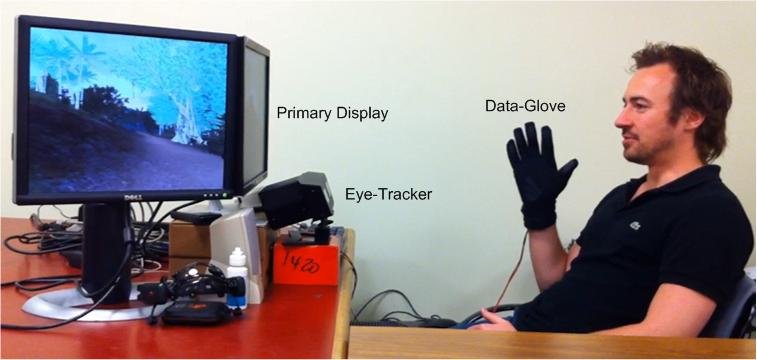
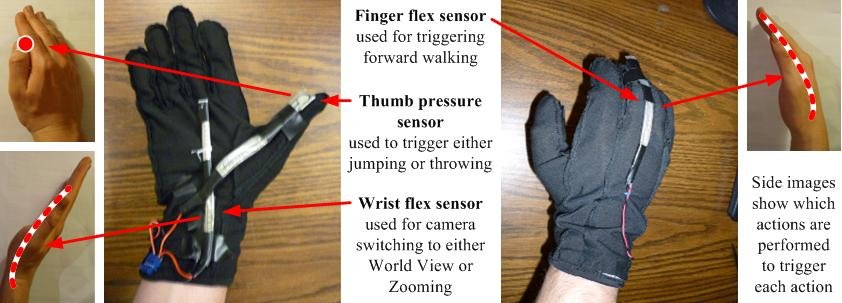
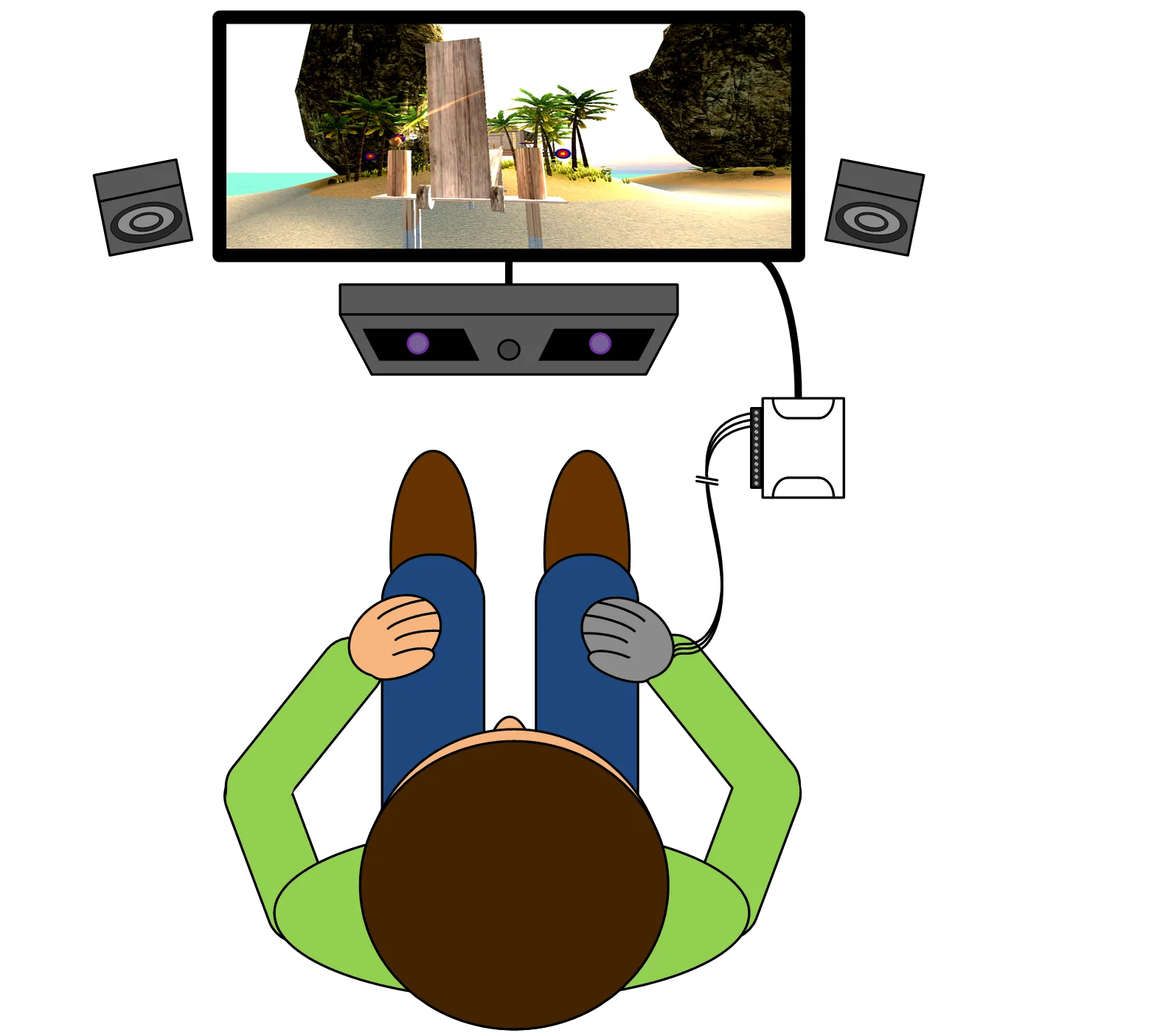
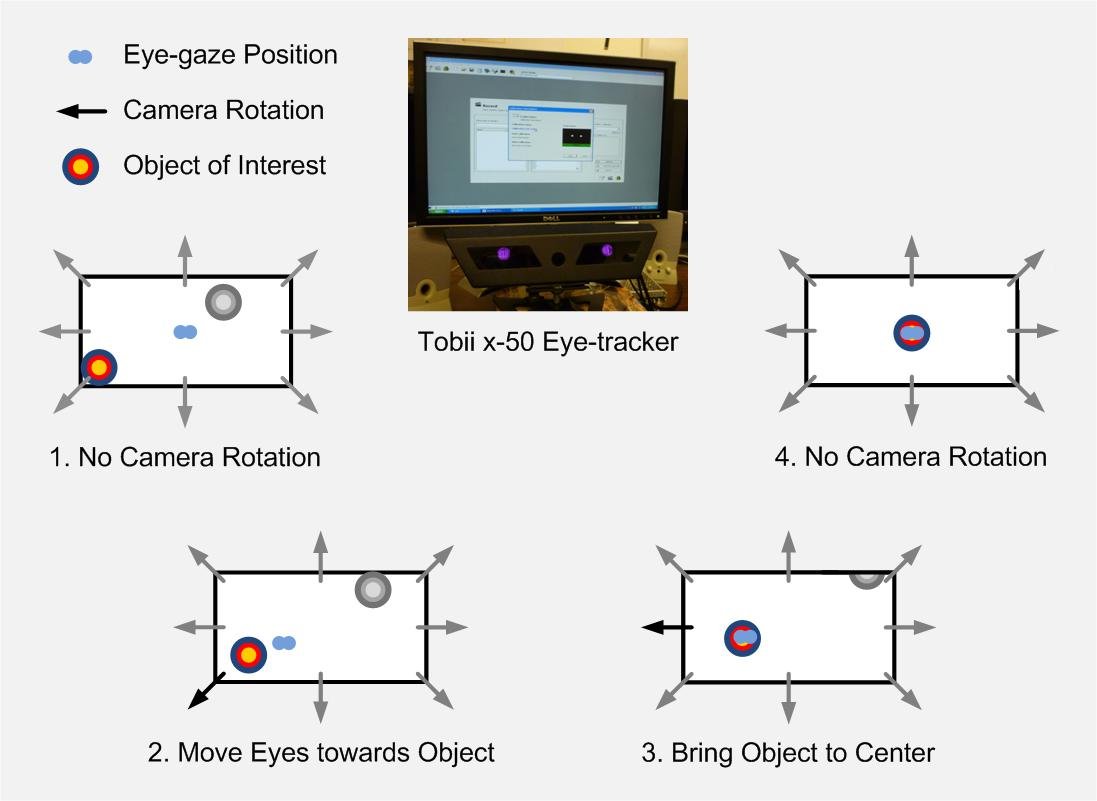
- The design and development of an Adaptive Interface Design (AID) that promotes Accessibility, Usability, and Inclusion. I applied agile methods to achieve this goal, executing iterative hardware and software development phases and usability research cycles. The hardware comprised an eye-tracker and data-glove, and the software consisted of Labview and UDP communication on the back-end, combined with a simple video game built in Unity.
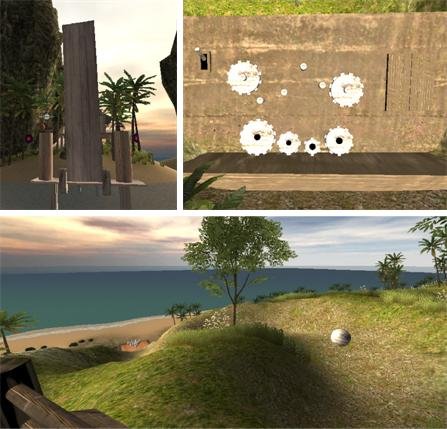
For the virtual environment test bed, I started with Unity's beautiful demo island and expanded it by including several challenges such as a coconut throwing game, a bowling game, a puzzle game, and a helicopter ride. All of the interactions were triggered using the Adaptive Interface Design (AID) that I developed. By combining the input of an eye-tracking device and a self-made data-glove, users are able to explore and manipulate their virtual surroundings through natural eye-fixations and intuitive hand gestures.
The remainder of this page includes several captures, schematics, and demonstration videos.
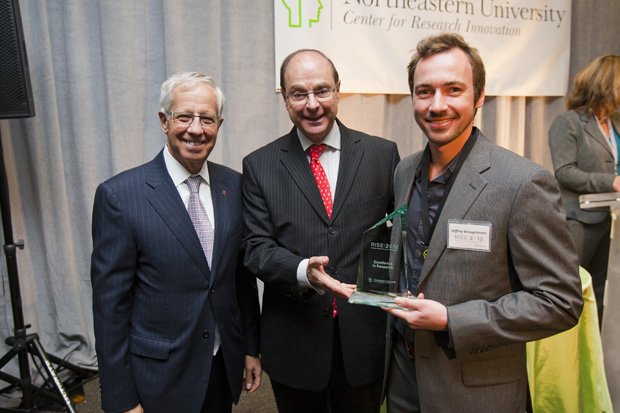
Read the Boston Globe article Read the NEU News article
Visit my

System Design
Demonstration Videos
Here you can watch a brief demonstration video for my project. In this video I discuss the interface design that I developed and its implications on human-computer interaction; especially for those who experience physical disability.
This video demonstrates the wireless (UDP) connection I built in to enable communication between the data-glove and a remote computer. In this demo, I designed a screen on my iPad to reflect the data-glove signals (flexing of the fingers and pressure applied to the thumb) in real-time. The underlying idea behind this concept is that a remote physician could review on a patient's performance without having to physically be there (e.g., in combination with a video call).
This video illustrates how the data-glove can be used to control the movement of a virtual helicopter. In this scenario, the helicopter's path was predetermined, but the user can control the speed of the helicopter very intuitively by altering the amount of flex in the fingers (more flex = higher speed). I added this feature to the environment to provide an additional game element (during the helicopter ride the player visually scans the island for collectible tokens), and to demonstrate the interface's capability in other control modalities.
In this case the user is not manipulating their virtual avatar, but an on-screen object instead (in third-person view), once again using intuitive hand gestures and eye movements.